Orange Wine Explained- Let's Go Big Orange...Wine!!

In Knoxville, Tennessee USA, orange is more than a color. By late summer, as college football season comes back to life, it spills everywhere from porches, storefronts, jerseys and the whole town on game weekends. Tennessee Orange, the primary color for the University of Tennessee, has a slightly yellow brightness that feels different from any ordinary shade.
On game day, the song “Rocky Top” seems to come from every direction. The whole city starts to hum with the same energy. For wine lovers, like me, that sea of orange can bring another thought to mind- orange wine.
Despite the name, orange wine is not made from oranges. It is made from grapes, just like white, rosé, and red wine. Its color comes from a winemaking method called skin contact, where white grapes ferment with their skin for some period. The result can be golden, orange, copper, amber, apricot or tea colored.
It may look like a new trend on modern wine lists, but the style is ancient from parts of Europe and the Caucasus region. This winemaking method has been used for thousands of years in what is now Georgia (the country, not the state).
What exactly is orange wine? Let's open a bottle.

What "Orange Wine" Actually is
The simplest way to understand orange wine is this:
Orange wine is made from white grapes that spend time fermenting or soaking with their skin.
Before diving into orange wine, let’s first understand how a wine’s color or structure like tannins originate from different parts of the grape.
Skin: This is where color, tannins, and many flavor compounds come from. Anthocyanins are pigments found in grape skins that give wine its color.
Pulp (Flesh): This provides juice, which contains water, sugar (turns into alcohol), and acids.
Seeds and Stems: These contain bitter oils and high amounts of tannins. The stems are only available if the winemaker hand harvested the grapes.
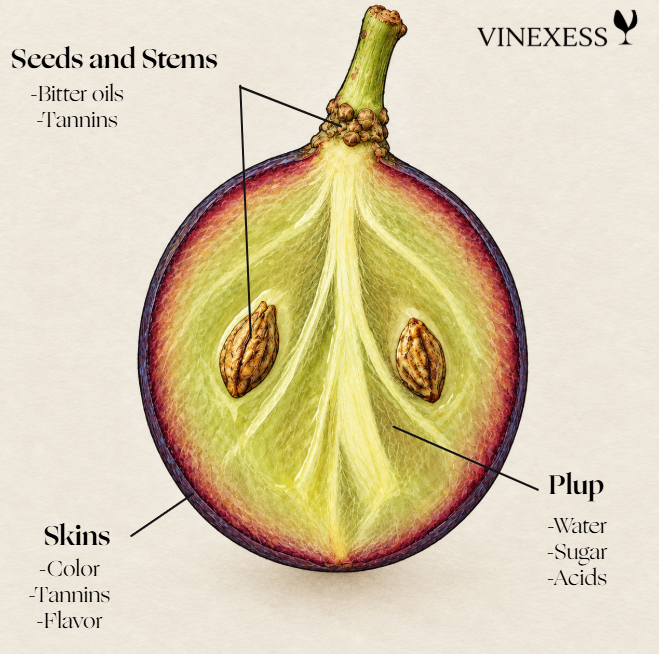
Most white wines are made by pressing the white grapes soon after harvest, separating the juice from the skins and fermenting only the juice. Since the skins do not stay in contact with the juice for long, the wine usually keeps pale, crisp, and clean in color with a fresh and light texture.
With red wines, black grapes are fermented with the skins, which give the wine its red color, tannin, flavor, and structure.
Orange wine follows a different path. The winemaker leaves the white grape skins in contact with the juice. Those skins contain color, flavor, compounds, and tannins. Over time, they give the wine its color, flavor, and a more textured feel.
What about rosé? Rosé wine is made from black grapes, while orange wine is made from white grapes, meaning they start with different kinds of grapes. However, from the perspective of their winemaking approach- macerating the juice with the grape skins extract color and flavor- they share a very similar concept.*
That is why the term “skin-contact wine” shows up on many restaurant and wine bar lists. It sounds more technical and accurate than “orange wine.” Yet it can create its own confusion because many wines involve skin contact in some form. Red wines depend on it. Rosé gets its pink color from brief contact with black grape skins. Even some conventional white wines may see very short skin contact before pressing.
To put it bluntly, orange wine is nothing less than this: skin-contacted white wine.
It is not a fruit wine made from actual oranges, nor a cocktail like mimosa. It is made from white grapes. Yet, it is not just darker white wine, and it does not taste quite like white, rosé, or red wine.
It has earned its own place because the method of skin contact gives white grapes a completely different personality. "Orange is the New White".
What Orange Wine Tastes Like
While the flavor changes depending on the variety of white grapes used, skin contact is the key here too.
Short skin contact makes a lighter style, which tends to be refreshing and paler golden color. It might taste like citrus peel, dried flowers, apricot, and green tea with gentle tannins. Its flavors feel close to white wine but with a little more texture.
Conversely, longer skin contact makes orange wine with a deeper amber color, more tannin, and stronger flavors. It can taste like dried orange peel, honey, nuts, dried herbs, chamomile, or black tea.
The texture often stands out as much as the flavor. Where grape skins add tannins, orange wine can have a gentle grip on the palate. It may feel more structured than some white wine. That grip helps it stand up to rich, salty, spicy, or fried foods. Pizza, wings, chips, tacos, grilled sausages... it starts to sound like the wine found a spot at game day gatherings.
Common traits include:
More texture than most white wine
More savory character than many rosés
A wide range of colors, from pale gold to deep amber
Food-friendly acidity and some body
Some bottles are clean, polished, and easy to love. Others are funky, cloudy, and more adventurous. If the first orange wine you try is too wild, do not write off the whole category. The range is broad.
So, you can choose an orange wine based on your mood or the situation, using its color as a helpful guide. When you want a refreshing drink in a casual setting, look for a clear, lighter shade. If you are pairing it with snacks or a meal, go for a slightly darker orange wine. If you are in the mood for an unusual flavor or an exciting new discovery, try a cloudy, unfiltered one. Personally, I highly recommend this style to IPA beer or kombucha lovers. Because orange wine comes in such a wide variety, you can play around with your choices like this. That amazing versatility is exactly what makes orange wine so special.

Ancient Roots Made Orange Wine Modern Again
Orange wine may feel like a new trend, but the method is very old. Long before stainless steel tanks and temperature-controlled cellars, winemakers fermented grapes with skins, seeds, and sometimes stems simply because that was the practical way to make wine.
The Country of Georgia has one of the oldest and most famous traditions of making skin-contact white wines. Many Georgian wines ferment or age in large clay vessels called qvevri (“kveh-vree”), which are buried underground. White grapes can spend extended time with their skins and oxygen exposure, creating amber colored, textured wines.
Across parts of northeastern Italy and Slovenia, producers also kept old skin-contact traditions alive, especially with grapes such as Pinot Grigio. In recent decades, these wines have gained attention from around the world.
So orange wine is both ancient and modern. The technique has been around for centuries, but its popularity in restaurants, shops, and casual gatherings feels fresh.

Grapes Often Used for Orange Wine
Many white grapes can become orange wine, but some appear more often because their skins, aromatics or acidity hold up well during maceration.
Ancient white varieties such as Ribolla Gialla grape in Friuli Italy and Slovenia, another grape variety Rkatsiteli in Georgia and Eastern Europe, are often used for orange wines. Pinot Grigio/Gris is also often used for making orange wines and it deserves special mention because its grape skins are naturally grayish-pink. With skin contact, it can turn copper or salmon-orange. These wines may look like rosé, but they come from white grapes. What beautiful color magic.
Adding to these above grapes, orange wine also can be made from other various white grapes (e.g. Chardonnay, Sauvignon Blanc, Trebbiano and Gewürztraminer) across many different regions, and each grape variety brings its own unique personality to the flavor.

Where Orange Wine is Made Today
Orange wine is now made in many wine regions, but a few places have special importance.
Georgia
Georgia has one of the deepest traditions of skin-contact wines. Traditional qvevri wines can be deeply amber, structured, and earthy.
Northeastern Italy
Friuli-Venezia Giulia is one of the best-known regions for orange wine in Western Europe. Nearby regions also produce beautiful skin-contact wines, ranging from elegant to bold.
Slovenia
Slovenia, especially areas near the Italian border, shares a strong skin-contact tradition.
Elsewhere in Europe and Beyond
Orange wine is also made in Austria, Croatia, France, Spain... and many other places. Outside Europe, winemakers in the US, Australia or South America have embraced the style too. That global growth means orange wine is easier to find than it used to be.
The orange wine pictured above is made from 100% Pinot Gris, produced in Oregon's Willamette Valley. Juicy yet, structured with apparent tannins and high acidity. The wine bar we tasted this orange wine also has a cheese shop next to it. We enjoyed this beautiful deep pinkish-copper colored orange wine paired with an aged hard nutty cheese.
Food Pairings for Orange Wine
Orange wine is one of the most food-friendly wines because it can handle flavors that often challenge white or red wine. It has the acidity of white wine, the structure of red wine with sometimes a savory edge of herbs.
It has enough freshness for lighter dishes, enough texture for richer foods, and enough personality for spice, herbs, smoke, and salt.
The wine’s tannins can handle fat. Its acidity cuts through richly flavored dishes.
The robust structure compared to crisp whites or rosés may even make it a great choice for spicy or strongly flavored food, such as Korean spicy fried chicken, Thai or Indian curry dishes.
As I mentioned earlier, orange wine's flexibility and food-friendliness can handle game watch party types of foods like pizza, wings, tortilla chips and dips very well. All these casual foods share common traits; salty, fatty, savory, richly flavored, sometimes spicy and smoky.
Orange wine- its defense covers a broad field and is adaptable to any game strategy.
However, I suspect the chances are, not many are seriously analyzing a glass of wine for an hour while watching a game. People are cheering, screaming, eating, talking, and reaching for another slice.

Orange Wine for Big Orange Fans and Curious Wine Drinkers
Orange wine has a way of surprising people. The color catches attention first. Then the texture, aroma, and food-pairing range do the real work. It is ancient and modern at the same time. It can be serious or casual.
So, when the color of Tennessee Orange and the "Rocky Top" song covers the entire town, there is a fitting bottle to open. Let's enjoy rooting for the Big Orange with a glass of the same color.
Cheers!
Note:
*Rosé wines are generally made in one of three ways- direct pressing (the same way as in white wine production), short maceration (black grapes are crushed and macerated to extract flavor and color for a short period of time), or blending (small red wine is added to white wine). For more details, please refer to my other article here.


